
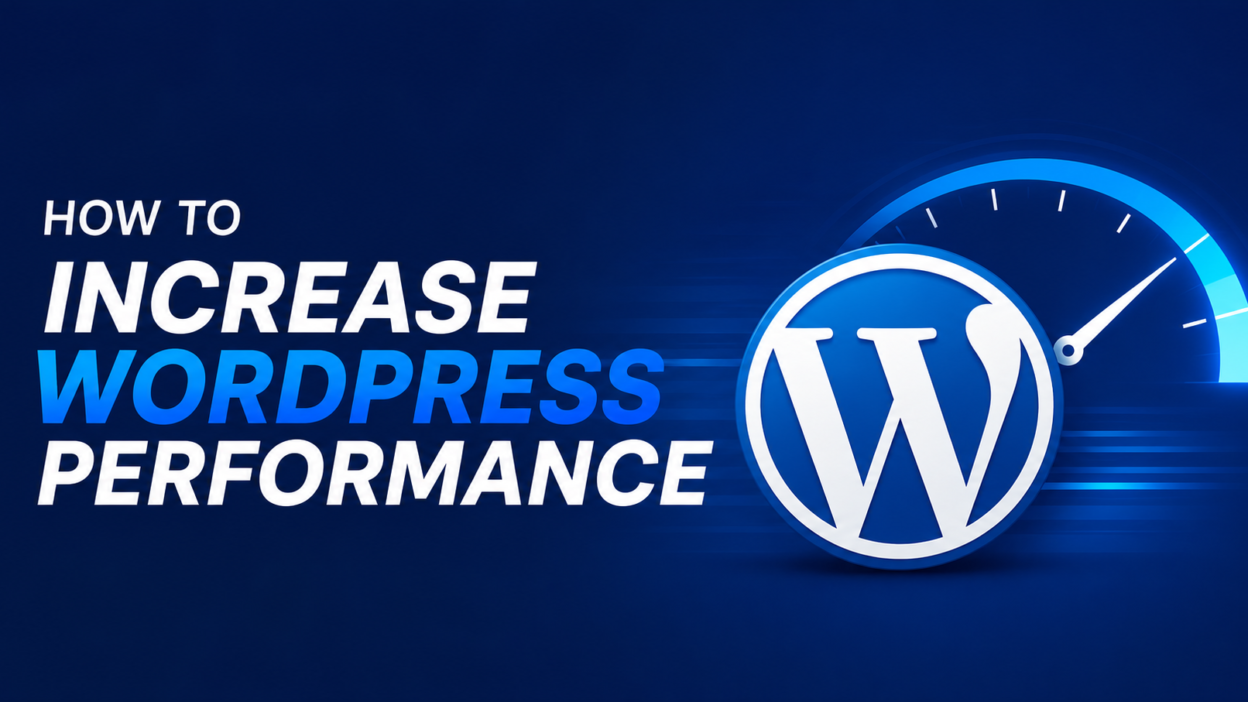
How to Speed Up Your WordPress Website
Introduction
Website speed is no longer just a convenience—it’s a necessity. Whether you’re running a personal blog, an online store, or a business website, visitors expect your pages to load quickly. Even a delay of a few seconds can increase bounce rates, reduce conversions, and negatively impact your search engine rankings.
Fortunately, WordPress offers many ways to improve performance without requiring advanced technical knowledge. By making a few strategic optimizations, you can significantly reduce loading times and create a smoother experience for your visitors.
In this guide, you’ll learn the most effective techniques to speed up your WordPress website and keep it performing at its best.
Why Website Speed Matters
A slow website affects more than just user experience. Search engines like Google consider page speed when ranking websites, meaning a faster site has a better chance of appearing higher in search results.
Improving website performance can help you:
- Increase visitor engagement
- Improve SEO rankings
- Reduce bounce rates
- Increase conversions and sales
- Lower server resource usage
- Enhance mobile browsing performance
The faster your website loads, the more likely visitors are to stay and interact with your content.
Test Your Website Speed First
Before making changes, it’s important to measure your website’s current performance.
Popular speed testing tools include:
- Google PageSpeed Insights
- GTmetrix
- Pingdom Website Speed Test
- WebPageTest
These tools provide detailed reports showing what’s slowing down your website and where improvements can be made.
Choose High-Performance WordPress Hosting
Your hosting provider is the foundation of your website’s performance.
Cheap shared hosting may struggle to handle traffic spikes, while optimized WordPress hosting offers faster servers, better caching, and improved reliability.
NivoHost Offers WordPress Hosting Just $ 1.29/mo
When selecting a hosting provider, look for:
- SSD or NVMe storage
- LiteSpeed or Nginx web server
- Latest PHP version
- HTTP/3 support
- Built-in caching
- Free SSL certificates
A reliable hosting provider can dramatically improve loading speeds before you make any additional optimizations.
Use a Lightweight WordPress Theme
Not all WordPress themes are built with performance in mind.
Feature-heavy themes often include unnecessary scripts, animations, and page builders that slow down your website.
Choose a lightweight, well-coded theme that prioritizes speed while still providing the design flexibility you need.
A clean theme creates a solid foundation for better overall performance.
Install a Caching Plugin
Caching is one of the easiest and most effective ways to speed up WordPress.
Instead of generating pages dynamically for every visitor, a caching plugin stores a ready-made version of your pages and serves them instantly.
Popular caching plugins include:
- LiteSpeed Cache
- WP Rocket
- W3 Total Cache
- WP Super Cache
Proper caching reduces server load and improves loading times for both new and returning visitors.
Optimize Your Images
Large image files are one of the most common causes of slow websites.
Before uploading images:
- Resize them to the correct dimensions.
- Compress them without losing quality.
- Use modern formats like WebP where possible.
- Enable lazy loading so images load only when needed.
Smaller image sizes reduce page weight and improve loading speed, especially on mobile devices.
Enable a Content Delivery Network (CDN)
A CDN stores copies of your website on servers around the world.
When someone visits your site, content is delivered from the server closest to their location, reducing latency and improving loading times.
Using a CDN is especially beneficial if your website has visitors from multiple countries.
Keep WordPress Updated
Regular updates improve both performance and security.
Always keep these components updated:
- WordPress core
- Themes
- Plugins
- PHP version
Updates often include performance enhancements, bug fixes, and compatibility improvements.
Before updating, create a complete website backup to avoid potential issues.
Reduce the Number of Plugins
Installing too many plugins can slow down your website, particularly if they load unnecessary scripts or perform resource-intensive tasks.
Review your installed plugins regularly and remove any that are no longer needed.
Focus on quality rather than quantity by choosing well-maintained plugins from reputable developers.
Optimize Your WordPress Database
Over time, your database collects unnecessary data such as:
- Post revisions
- Spam comments
- Trashed posts
- Expired transients
Cleaning your database regularly helps reduce its size and improves query performance.
Many optimization plugins can automate this process safely.
Enable GZIP or Brotli Compression
Compression reduces the size of files sent from your server to visitors’ browsers.
Smaller files load faster, resulting in improved website performance.
Most modern web servers support either GZIP or Brotli compression, and many hosting providers enable them automatically.
Minify CSS, JavaScript, and HTML
Website files often contain unnecessary spaces, comments, and formatting that browsers don’t need.
Minifying these files reduces their size and speeds up page loading.
Many caching plugins can automatically:
- Minify CSS
- Minify JavaScript
- Minify HTML
- Combine files where appropriate
Always test your website after enabling minification to ensure everything functions correctly.
Enable Browser Caching
Browser caching allows visitors’ browsers to store static resources such as images, stylesheets, and JavaScript files.
When users return to your website, these resources don’t need to be downloaded again, significantly improving repeat visit performance.
Use Redis or Memcached for Object Caching
Object caching stores database query results in memory, reducing repeated database requests.
For dynamic WordPress websites and WooCommerce stores, Redis or Memcached can dramatically improve performance by delivering frequently requested data much faster.
If your hosting provider supports object caching, enabling it is one of the best performance upgrades you can make.
Optimize Fonts and External Scripts
External resources such as Google Fonts, advertising scripts, social media widgets, and analytics tools can increase page load times.
To improve performance:
- Use fewer font families.
- Limit font weights.
- Load fonts locally when possible.
- Remove unnecessary third-party scripts.
Every external request adds loading time, so reducing them improves overall performance.
Monitor Website Performance Regularly
Website optimization isn’t a one-time task.
Regularly monitor:
- Core Web Vitals
- Page loading speed
- Server response time
- Database performance
- Plugin updates
Routine maintenance ensures your website continues to perform well as content and traffic grow.
Common Mistakes That Slow Down WordPress
Many websites become slow because of avoidable mistakes, including:
- Uploading oversized images
- Installing excessive plugins
- Using low-quality hosting
- Ignoring software updates
- Choosing poorly optimized themes
- Running outdated PHP versions
- Not enabling caching
Avoiding these issues can significantly improve your website’s speed.
Final Thoughts
A fast WordPress website creates a better experience for visitors, improves search engine rankings, and increases the likelihood of conversions. While there isn’t a single solution that fixes every performance issue, combining several optimization techniques can produce remarkable results.
Start with reliable hosting, enable caching, optimize your images, clean your database, and regularly monitor your website’s performance. These improvements may seem small individually, but together they can dramatically reduce loading times and keep your website running smoothly.
Website speed is an ongoing investment. By making performance a priority, you’ll create a faster, more reliable WordPress site that benefits both your visitors and your business.